From the CPO's Desk
Circular Bioeconomy Potential of Agriculture and Forest Landscapes in Maharashtra: Pathways for Regenerative Agriculture and Sustainable Forestry
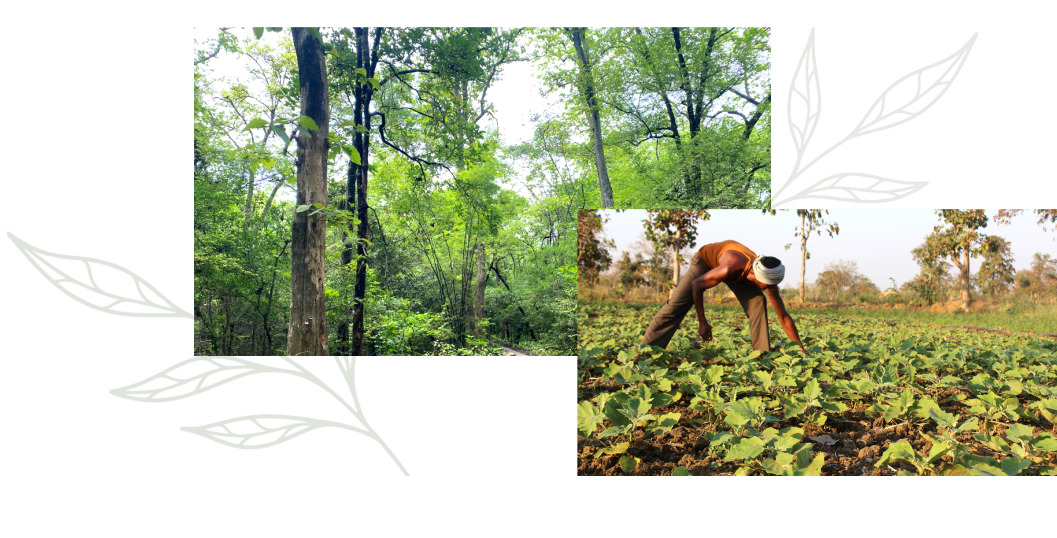
Maharashtra’s agriculture and forestry sectors present significant scope for transition toward a circular bioeconomy model. With over 55% of the state’s population dependent on agriculture and nearly 20% of its geographical area under forest cover, the integration of regenerative and resource-efficient systems holds strong developmental potential. Soil degradation, rainfall variability, and underutilized biomass resources indicate both a challenge and an opportunity for systemic transformation.
The scope for regenerative agriculture in Maharashtra is substantial, particularly in rainfed regions such as Vidarbha and Marathwada. Conservation agriculture, crop diversification, integrated livestock systems, and biological soil enhancement practices have demonstrated potential to improve soil organic carbon, enhance water-use efficiency, and stabilize farmer incomes. Given that nearly 30% of India’s land faces degradation, large-scale adoption of regenerative approaches in the state could significantly strengthen long-term agricultural productivity and climate resilience.
Agroforestry presents further expansion potential. With India already having over 28 million hectares under agroforestry, Maharashtra can strategically scale tree-based farming systems involving bamboo, timber, and fruit species. Integrated models have the potential to increase land productivity by 20–40%, diversify income streams, and reduce pressure on natural forests. In forest-rich districts such as Gadchiroli and Chandrapur, community-linked agroforestry and sustainable forest management can enhance livelihood security while conserving biodiversity.
The residue management sector offers strong economic potential. Maharashtra generates substantial quantities of crop residues including cotton stalks, soybean straw, and sugarcane trash. These resources can support decentralized bioenergy production, biochar applications, briquetting units, and bio-based material industries. Structured biomass valorisation systems could reduce environmental pollution, generate rural enterprises, and contribute to the state’s renewable energy and climate commitments.
Within this emerging landscape, Institutions for Centre of Excellence holds strategic potential to position itself as a regional hub for circular bioeconomy research, innovation, and demonstration. The Centre can facilitate pilot projects on regenerative farming, agroforestry optimization, and biomass utilization technologies tailored to Maharashtra’s agro-climatic conditions. Capacity-building programmes targeting farmers, forest communities, and rural entrepreneurs can accelerate adoption and create a skilled bioeconomy workforce.
The cumulative potential of these interventions extends beyond environmental sustainability. Improved soil health, diversified farm incomes, decentralized biomass enterprises, and strengthened forest-based value chains can contribute to rural employment generation, reduced input dependency, and enhanced resilience to climate variability.
Maharashtra’s agrarian and forest landscape provides a strong foundation for advancing a circular bioeconomy framework. With coordinated research, field demonstration, and institutional support, STRC can play a catalytic role in unlocking this potential and steering the state toward a regenerative, resource-efficient, and economically robust rural future.