From the CPO's Desk
Beyond Beneficiaries: Women Shaping Grassroots Technological Change in Rural and Tribal Contexts

Author
Shri. Swapnil Girade
Chief Program Officer & Head, STRC
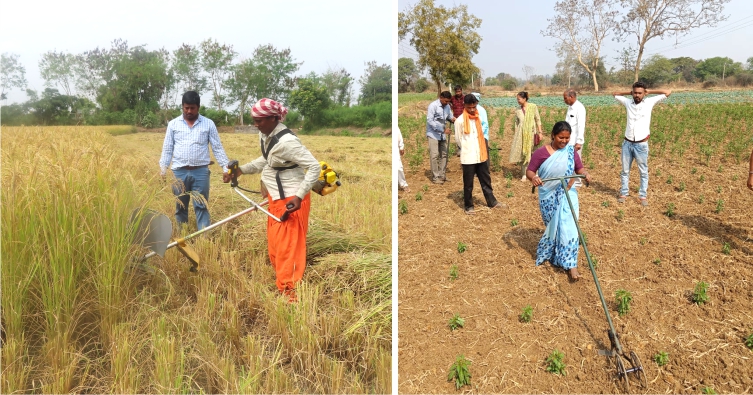
Tribal women form the economic and social backbone of rural landscapes in regions such as Gadchiroli. Their daily operations encompass a complex matrix of agricultural labor, minor forest produce collection, household management, and traditional practices. Historically, rural development frameworks have positioned these women as passive beneficiaries of welfare programs. However, a critical paradigm shift is underway. Through the strategic introduction of accessible, low-cost technologies, STRC is witnessing tribal women emerge as proactive agents of technological and economic transformation.
Taking a holistic approach to tribal development requires understanding the interconnected nature of women’s daily routines. Interventions must address livelihood enhancement, physical health, agricultural efficiency, and food security simultaneously. By deploying context-specific innovations, we are bridging the gap between traditional practices and modern scientific applications.
Revolutionizing Forest Produce Collection
The collection of Non-Timber Forest Products (NTFP) is a primary economic driver in tribal regions. The traditional harvesting of Mahua flowers, for instance, requires women to endure prolonged periods of bending and squatting. This labor-intensive method not only causes severe musculoskeletal stress but also exposes the collected flowers to soil contamination, thereby reducing their market value.
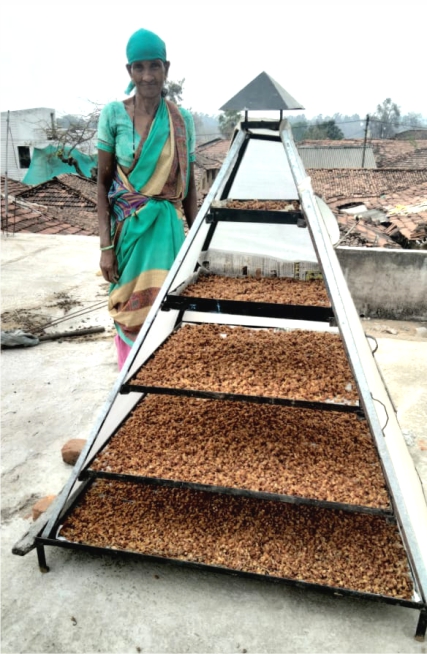
To address this, STRC executed the deployment of low-cost, net-based Mahua harvesters. By laying out specialized nets beneath the trees, women can collect falling flowers effortlessly and hygienically. This simple technological shift yields profound results. It eliminates extreme physical drudgery, prevents contamination from dirt and moisture, significantly elevates the grade of the produce and drastically reduces the time. Consequently, women command better market prices while safeguarding their long-term physical health.
Drudgery Reduction Through Processing Technologies
Time poverty is a significant barrier to the economic advancement of rural women. Manual food processing and agricultural post-harvest routines consume hours that could otherwise be utilized for income-generating activities or community leadership.
The introduction of Agri-allied tools and low-cost processing mechanisms at the community level has fundamentally altered this dynamic. These versatile machines handle multiple agricultural and domestic processing tasks with high efficiency. By mechanizing the post harvesting of spices, grains, and forest yields, these tools drastically reduce the physical toll on women. The immediate outcome is a substantial reduction in domestic drudgery. The long-term impact is the creation of a time surplus, allowing women to engage in self-help groups, micro-enterprises, and skill-building initiatives.
Scientific Standardization of Tribal Food Products
Transitioning from subsistence-level food processing to market-ready entrepreneurship requires scientific validation. Tribal communities possess a rich heritage of indigenous foods and wild vegetables with immense nutritional value. However, penetrating formal markets requires consistency, hygiene, and extended shelf life.
STRC is addressing this gap by developing Standard Operating Procedures (SOPs) for tribal food products. This initiative involves the systematic nutritional profiling of indigenous ingredients and the establishment of standardized value-addition protocols. When women are trained to implement these SOPs, they transform traditional recipes into commercially viable, safe, and packaged food products. This convergence of indigenous knowledge and modern food technology places women at the helm of local food sovereignty and micro-entrepreneurship, ensuring their produce meets contemporary market standards.
A Holistic Impact on Livelihoods and Health
The integration of grassroots technology extends beyond mere economic metrics. It touches every aspect of a tribal woman’s life.
Health Outcomes: Ergonomic harvesting tools and mechanized processing equipment directly mitigate chronic joint and back pain, which are prevalent among rural women laborers.
Agricultural Operations: Time saved in domestic processing allows for better focus on crop management and the adoption of efficient farming practices.
Economic Independence: Standardized food production and higher-quality NTFP yields create reliable revenue streams, elevating the socio-economic status of women within their households and the broader Gram Sabha structure.
Collectively, The narrative of rural development must evolve. Tribal women possess the indigenous wisdom and operational resilience required to drive local economies. When equipped with appropriate, accessible, and low-cost technologies, they quickly transition from beneficiaries to innovators and entrepreneurs. The adoption of net-based harvesters, agri-allied tools and scientific processing SOPs proves that technology, when applied with a holistic understanding of local realities, is a powerful catalyst for equity. STRC remains dedicated to facilitating this ecosystem, ensuring that women continue to shape and lead grassroots technological change.